
Knowing The Name Of Something Is Different From Knowing Something
A Framework For Blazing Your Own Trail


We Are A Product Of Our Time (And Our Time A Product Of Us)
Each generation has memories of mundane moments that define an era.
In an all-too-human twist, we tend to be entirely unaware of how fleeting those moments are. The technologies that define our time, as all technologies are, live on borrowed time - doomed to a lesser or greater extent to be supplanted by the alternatives of the future.
One year my family went on a summer road trip to the Grand Canyon. To a 7 year old with an overly active imagination, our drive from Las Vegas through the arid and desolate expanse of Nevada followed in the footsteps of the pioneers and rebels in my books who settled the West.
We would pile in to the car, where my mother would produce a critical sacrament: An actual, physical paper map.
As soon as I heard the paper crinkle, I would miraculously wake from my nap, my head appearing between the front seats as my father deliberated from the driver’s seat while my mother fussed with the map to get it to lay right.

Like three explorers in a strange land, we would identify a nearby local landmark, tracing possible routes to our destination and debating the merits and drawbacks of each. “No,” my father would give a firm shake of his head as I proposed my route, “we’ll run straight into traffic going that way. Check this out,” he’d suggest his alternative, which would trigger another debate amongst the group. At some point, we’d reach consensus on the best course of action and be on our way.
This experience - one I’m sure is by no means unique to me or my family - has been supplanted entirely by the advent of Google Maps. What we’ve gained in convenience we’ve lost in the skill to read a paper map and debate the merits of route choices.
This example is a microcosm of the trade-offs that define our time: It’s so easy to be spoon fed answers now that our ability to ask the right questions and investigate has atrophied. Increasingly, we have become a people who fail to make the distinction between knowing the name of something and knowing something.
Unfortunately, this is a bias built into human biology, and one fostered by the political and societal institutions that surround us. We are a society that pays lip service to the importance of the individual, but at the same time expect our individuals to acquiesce around the existing beliefs of the collective.
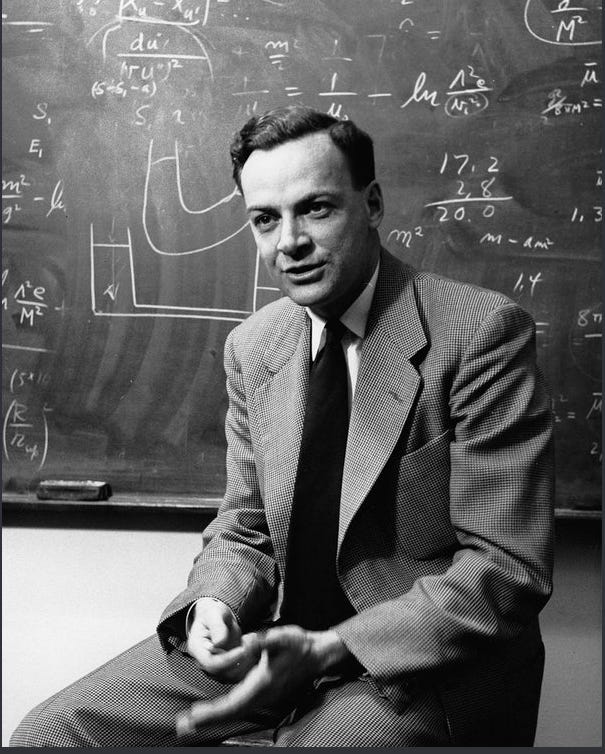
What follows is a deeply personal exploration of building that critical thinking muscle by following the wise injunction of Richard Feynman: “Study hard what interests you the most in the most undisciplined, irreverent and original manner possible.”
Enter The Education System
It’s a hilarious, ironic and sad fact that the number one threat to critical thinking in modern society is the education system.
Like all institutions, schools are comprised of people who act in response to incentives, and in a feature all too common of centralized decision making, policies that are superficially well-meaning distort incentives in such a way as to undermine the intent of the policy.
Programs like No Child Left Behind (2001) and the Every Student Succeeds act (2015) made schools formally accountable for the success of student performance. 20-50% of a teacher’s performance rating stems from standardized test scores, with poor performance ratings resulting in career stagnation, getting transferred, or getting laid off. Schools with poor test results risk loss of funding, state intervention, or even closure.
Under such constraints, it’s no surprise what’s happened: Because stakes are high, curricula get narrowed to tested subjects (reading, math), often at the expense of critical thinking, creativity, or non-tested areas (arts, civics). Empirical studies (e.g., Dee & Jacob 2011; Koretz 2017) show measurable score gains on tested material, but not in broader critical reasoning or long-term retention.

The end result is a perversion and destruction of what it actually means to learn. Unlike the School of Athens, where thinkers wrestled with first principles and asked questions so fundamental they bordered on madness, our modern education system looks less like a symposium of inquiry and more like a factory. It engineers compliance, rewards rote regurgitation, and punishes divergence.
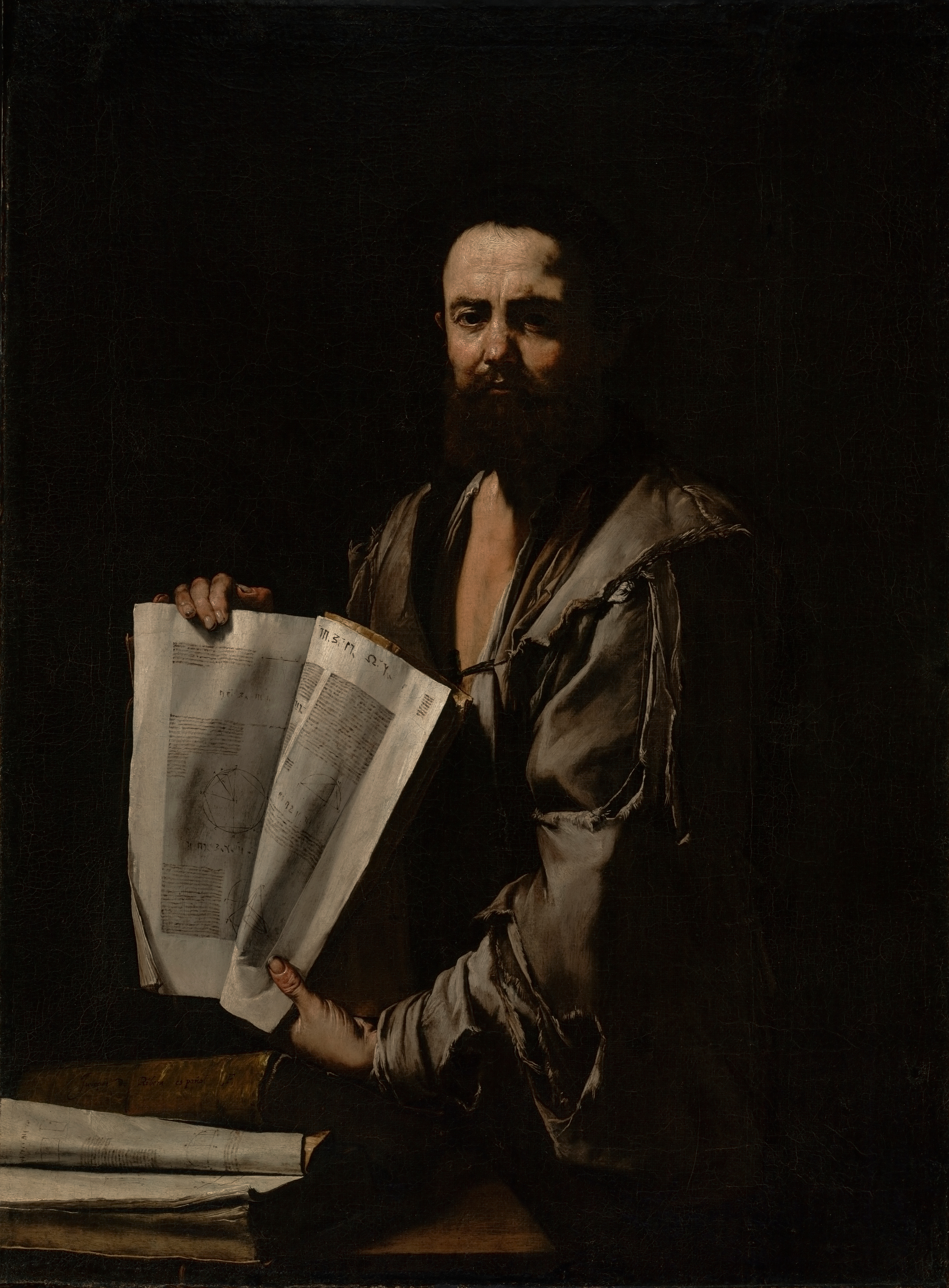
Consider Euclid. This man sat down in 300 BC and asked, almost certainly to the bewilderment of all: What even is a point? Not a rock, not a star, not a tree — just the idea of a point. From that wild act of abstraction, he declared: If two points exist, then the line between them exists, too. From there, he conjured geometry out of thin air. That was audacious, heretical, world-making thought.
Education Of A Free Thinker
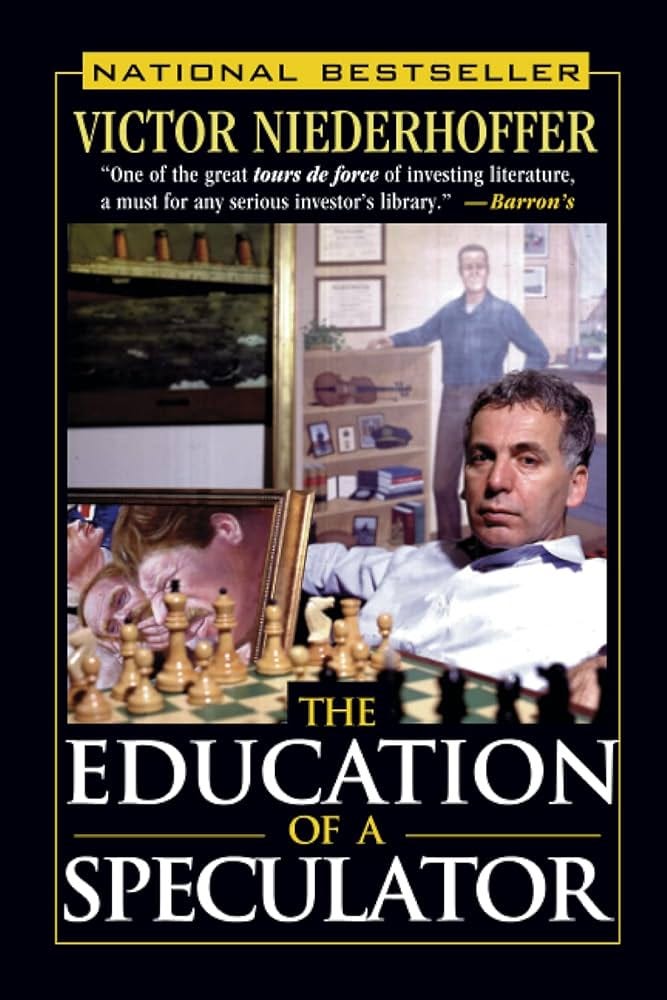
In 2022, I picked up a copy of Victor Niederhoffer’s Education Of A Speculator. Unlike the litany of trading-specific books on the market, EOAS takes a different track: “Zero practical applications to trading or investing,” one Amazon review reads. “Tangential - when will he get to the point?” Says another. Rather than a prescriptive “how to” on trading, Vic imparts wisdom via Dem Umweg - “the roundabout way” - taking his readers through a personal process of developing universal axioms formulated through living and reflecting upon a rigorous life.
Vic spoke to a spark inside of me that had all but died a decade earlier at the hands of derision from the very serious professors of economics at a “prestigious” institution of higher learning, who viewed learning as rote memorization divorced entirely from reality.
Equal parts Zen koan, statistics paper and autobiography, EOAS embodies the Miyamoto Musashi quote: “If you know the way broadly, you will see it in everything.”
Let’s talk about how you, too, can become acquainted with The Way.
The Niederhoffer Six - An Experimental Framework
What the myopic Amazon reviewers seeking a silver bullet missed was that EOAS is fundamentally fractal in nature: The narrative structure reveals exactly what one must do to find The Way.
“A speculator must think for himself [and] follow his own connections,” Vic advises, “self-trust is the foundation of successful effort. Don’t follow the mentally lazy habit of allowing a newspaper or broker or a wise friend to do [your] security market thinking.”
Chapter after chapter of Education Of A Speculator laid out the same playbook in different applications:
1. Range Widely
Do interesting things across many domains. Let curiosity surface questions — even if they seem ridiculous, trivial, or obvious at first glance.
2. Collect Evidence
Gather and clean the data you need to explore those questions.
3. Build Capability
Learn (or borrow) the skills required to analyze the data properly.
4. Think Originally
Reflect on your findings and generate conclusions that are yours, not inherited.
5. Put Skin In The Game
Test your ideas in the real world. Take it to the next level and go _à la Niederhoffer_ - i.e., with extreme leverage and the ever-present risk of blowing yourself sky-high. They say the best way to learn about a hot stove is touching it, right?
6. Loop Back
Repeat the process endlessly: curiosity → data → skill → thought → test → curiosity again.
Let’s dive deeper into each of these principles.
1. Range Widely:
Victor Niederhoffer is a man that defies pigeon holing: National squash champion, trader, board game enthusiast, musician, art collector, writer...the list goes on and on.
How does the orthodoxy usually respond to such proclivities? You’ve probably heard the most common one: The jack of all trades is the master of none. You have to focus.
This injunction is a lie born of the Industrial Revolution. In a world where Adam Smith’s model of specialization has won out as a means of maximizing economic production, axiomatic “truths” are often merely a reflection of the role we are meant to play: Cogs in a machine that are optimized to take the fewest possible inputs to generate the largest output - what is called efficiency.
And yet we forget that it’s not efficiency - the predictable relationship between inputs and outputs - that categorize the genesis of era-defining technologies, but rather the happy accidents and chance stumbling-upon of the intellectually curious at play:

Stop asking yourself what “the point” of learning something is. If your heart calls to it, do it. Reject the tenets of a system that cares only for your ability to operate within its confines to produce more of what the world already has. The world needs you. It needs you to experience, to love, to reflect, to write, and in the process to derive your own truths from the intersection of what calls to your heart.
You are too unique, too interesting and too beautiful to let anybody put you in a box when you were meant to nurture a garden.
2. Collect Evidence

As you’re following your heart’s calling, your brain will naturally chime in - “I wonder if that’s true”, “I wonder if there’s any relationship between this and that” - all the greatest things in life start with “I wonder...”. Let it be your guide
Your brain will be your greatest ally at this stage but also your greatest enemy - resist the urge to pre-judge any of the data you gather. Niederhoffer counted everything - snowfall data in Central Park, number of filler words used by a representative of the Federal Reserve, the correlation of headline sizes with stock price movements - nothing lay beyond his capacity for counting. The truth lies at the heart of the paradox - if you knew why you were collecting the data, you wouldn’t need to collect it to begin with.
Regardless of what you want to know, there’s probably a public database you can access to pull the data you want, and unlike Vic, who had to use pen and paper, the litany of tools available for low to no cost today make intellectual explorations more engaging than ever. This leads us to step 3....
3. Build Capability
The advent of LLMs have made developing proficiency in your tool of choice a breeze.
Up until recently, self-paced learning was largely unidirectional: You’d go to a resource - whether that was a book, course or guide - and cross your fingers that the way the information was presented jived with your preexisting mental models. If not, you were pretty much screwed - no ability to say “explain that to me like I’m in the 4th grade” or “When you use [THIS TERM] my understanding of it is:....how accurate is that understanding and what would you challenge or build on?”
This feedback loop is one of the most joyous applications of LLMs there is. Rather than simply knowing the names of things, you can truly understand them.
And rather than learning in a vacuum - having completed steps 1 and 2 - you have two of the most important pre-requisites necessary to improve your information retention as well as your engagement: A why and a what
Reject consumption and embrace the tools of our era to enhance your capabilities and create your own world. Instead of spending an afternoon scrolling your phone in front of a TV show you’re not even watching - jump into Excel and run a model looking for the relationship between how two things you care about relate to each other. Earn the right to your opinions and stop letting media controlled by people with an agenda tell you what to think. Hunt down the raw data that is necessary to form an intelligent conclusion and hammer away at it like a blacksmith until you have something you’re proud of and can explain with something besides “the man on the TV said so”
We stagnate and ultimately die as a species when we stop asking questions and simply accept the answers that already are. What would our world today look like if Gutenberg conceded that copying books by hand was really quite therapeutic, or Edison had decided that candles smelled nice and offered sufficient illumination?
The tools to help you unearth your truth are out there. Seize them.
4. Think Originally
Armed with the results from step 3 , WRITE!
Resist the urge to jump straight to conclusions: Write about what led you to ask the question, write how you sourced the information to seek an answer, and the delta between what you expected/actually found.
Writing is not merely a mechanism to convey information but also a mechanism to work through your thoughts and clarify them. Like a muscle, the more you work it, the stronger it gets, and the more benefit you get. Most people never ask ”do I really believe that?”
Writing forces you to confront that question, and in the process become a more effective critical thinker.
If you’ve spent years in school, you will have a proclivity to judge the quality of your writing. Even if there were an objective definition for “good” writing (which there isn’t), such considerations put the cart before the horse: You can’t be good before you’re ok, and you can’t be ok before you suck. Rip the bandaid off. The sooner you swallow your pride, the sooner you reap the benefits of proficiency.
5. Put Skin In The Game and Bet
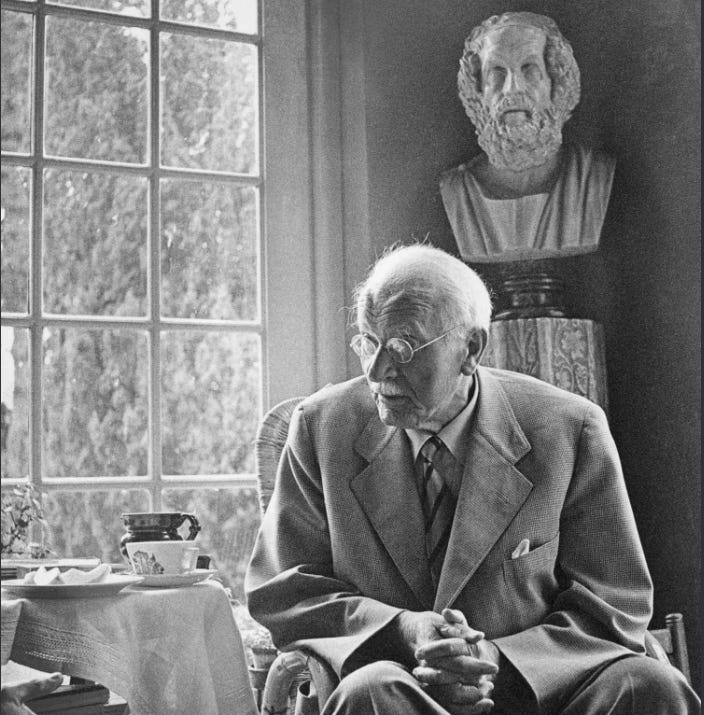
This section was originally called “Optionally, Bet” before I realized that skin in the game is not an optional component of the Niederhoffer Six.
Part of what tethers us to answers that already exist is a tendency toward risk-aversion and defaulting to the herd mentality.
In the nascent years of our species, disagreement was a death sentence - among our competitive advantages in the dominance hierarchy was an ability to cooperate and leverage social intelligence. Consequently, anybody who was uncooperative or fought the tribe was likely exiled or died in a heroic but valiant 1 v 1 with a sabretooth tiger.
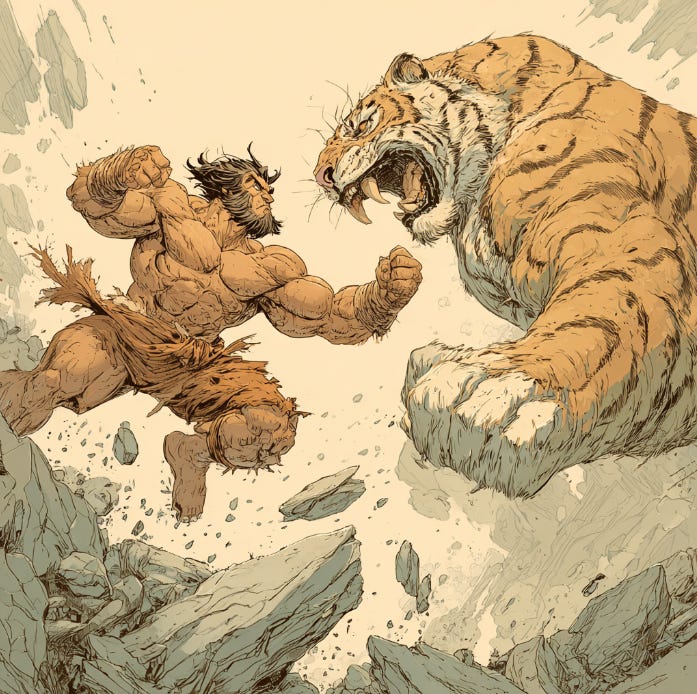
But as we’ve reached the top of the dominance hierarchy (...for now...) and ascended Maslow’s Hierarchy of needs, risking disagreement is no longer the death sentence that it once was - though physiologically it will still feel like it.
If you want to think original thoughts, this proclivity is one that must be broken, and the only way out is through. Put your findings in the public sphere and embrace the possibility that people might disagree with you.
This step forces you to in the words of Justin Bieber, really stand on business when it comes to what you’ve learned.
What you’ll find is that most people really don’t care enough to disagree, and you’ll actually attract your tribe (see Jung quote above)
Optional: Massively lever up and bet on foreign bank stocks amidst a banking crisis and lose 35 years of gains. Just kidding. (although you’ll definitely learn a thing or two)
6. Loop Back
Having completed steps 1-5, you are a different person.
And being a different person means looking at the world a different way - which makes it a different world.
Nietzsche’s “Three Metamorphoses” in Thus Spoke Zarathustra describes the spiritual journey of self-overcoming through three stages:
- the Camel, which embodies the spirit that carries heavy burdens and conforms to external values;
- the Lion, which symbolizes the rebellious spirit that says “no” to these values and seeks freedom;
- the Child, the ultimate goal, representing a new beginning, creativity, innocence, and the ability to create one’s own values and will a new world.

Every time you go through the Niederhoffer Six, you undergo these three metamorphoses over and over. Embrace the growth.
CONCLUSION
In a world that’s so willing to tell you the names of things and what to think, it’s rare to find resources on telling you how to learn what you think.
Follow the Niederhoffer Six and you will blaze your own trail.
In the next article, we’ll be using the Niederhoffer Six to examine a topic where everybody seems to have names but no understanding: Bitcoin.